
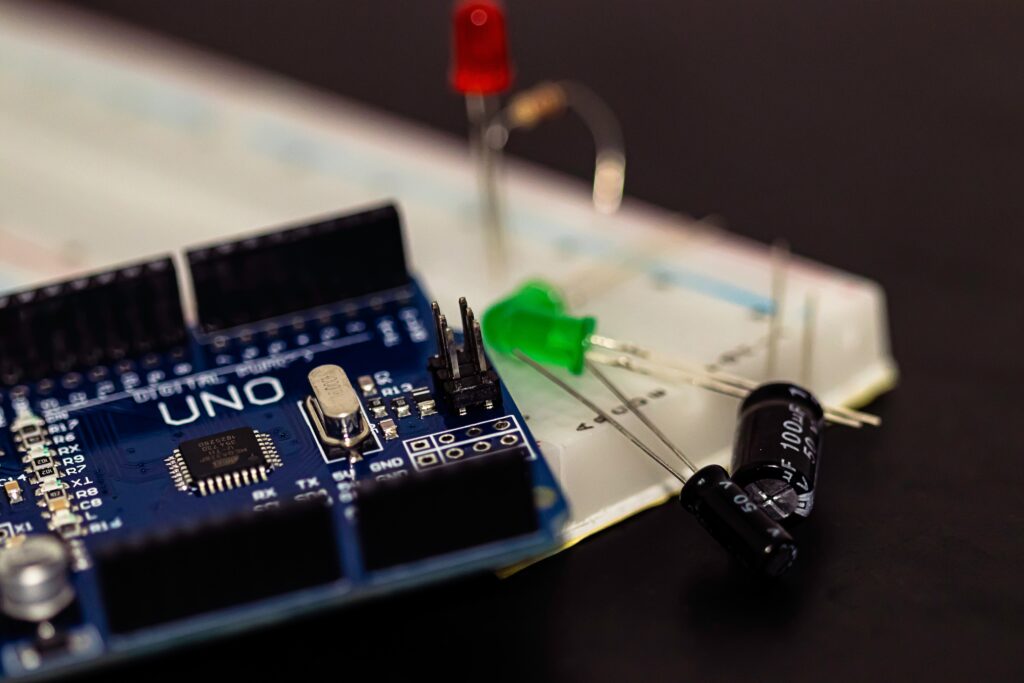
Breadboarding with a hydrogen cell battery can be a great educational activity for high school students to learn about alternative energy sources and circuit building. Here are the basic steps you can follow:
Materials:
- Hydrogen fuel cell battery
- Breadboard
- Jumper wires
- LED
- Resistor
- Multimeter (optional)
Steps:
- First, make sure your hydrogen fuel cell battery is fully charged and ready to use.
- Place the breadboard on a flat surface and connect the positive and negative terminals of the hydrogen fuel cell battery to the positive and negative rails of the breadboard, respectively.
- Next, connect one end of the resistor to the positive rail on the breadboard and the other end to the anode (positive) of the LED.
- Connect the cathode (negative) of the LED to the negative rail on the breadboard.
- Connect a jumper wire from the negative terminal of the hydrogen fuel cell battery to the negative rail on the breadboard.
- Finally, connect another jumper wire from the positive rail on the breadboard to the positive terminal of the LED.
Once everything is connected, the LED should light up. If it does not light up, try swapping the connections to the anode and cathode of the LED. You can also use a multimeter to measure the voltage and current in the circuit.
This is just a simple example of what you can do with a hydrogen fuel cell battery and a breadboard. You can experiment with different components and configurations to learn more about circuit building and alternative energy sources.