

Fluid power is an important aspect of modern engineering and technology. It refers to the use of fluids, such as liquids and gases, to transmit power and energy from one place to another. This technology is used in a variety of applications, ranging from heavy machinery and manufacturing to everyday items like cars and bicycles. In this blog post, we will explore the concept of fluid power, its applications, and its importance in modern society.

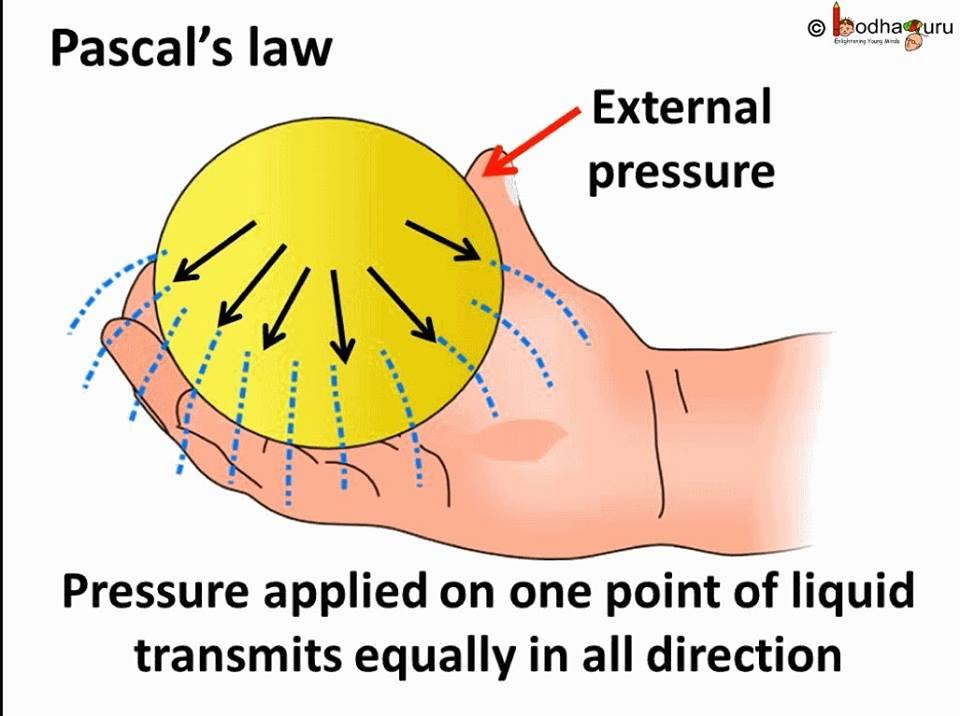
Fluid power is based on two principles: Pascal’s Law and Bernoulli’s Principle. Pascal’s Law states that any pressure applied to a confined fluid is transmitted equally in all directions. This means that if you apply pressure to one point in a fluid, that pressure will be distributed evenly throughout the entire fluid. Bernoulli’s Principle, on the other hand, states that the pressure in a fluid decreases as its velocity increases. This principle explains why planes can fly and how boats can move through the water.
Pascal’s Law
Pascal’s Law is an essential principle of fluid power that plays a significant role in hydraulic systems. The law states that any pressure applied to a confined fluid is transmitted equally in all directions. This means that if you apply pressure to one point in a fluid, that pressure will be distributed evenly throughout the entire fluid. As a result, Pascal’s Law allows for the amplification of force in hydraulic systems, making them ideal for heavy machinery.
The application of Pascal’s Law in hydraulic systems is seen in a variety of industries, including construction, manufacturing, and transportation. In hydraulic systems, liquids such as oil or water are used to transmit power from one place to another. This is done by applying pressure to the fluid in a confined space, which then moves a piston or cylinder to perform a specific task. For example, in a hydraulic crane, the operator uses a lever to apply pressure to the fluid, which then lifts the crane arm and moves the load.
Overall, Pascal’s Law plays a crucial role in fluid power and hydraulic systems. It allows for the amplification of force, making it ideal for heavy machinery and industrial applications. By understanding the principles of Pascal’s Law, engineers and technicians can design and operate hydraulic systems that are safe, efficient, and reliable.
Bernoulli’s Principle
Bernoulli’s Principle is another key principle of fluid power, which plays an important role in a variety of applications. The principle states that the pressure in a fluid decreases as its velocity increases. This means that as a fluid moves faster, the pressure in the fluid decreases. Bernoulli’s Principle explains how planes can fly, how boats can move through water, and how a ball can curve in the air.
In the field of aerodynamics, Bernoulli’s Principle is critical to the design and operation of aircraft. As an airplane moves through the air, the shape of the wings causes the air to move faster over the top of the wing, creating a region of low pressure. This low pressure then creates lift, which allows the plane to fly. Additionally, Bernoulli’s Principle is essential in the design of wind turbines, which use the principle to convert wind energy into electrical energy.
In conclusion, Bernoulli’s Principle is a key principle of fluid power that plays an important role in a variety of applications. From aerodynamics to energy production, the principle is used to design and operate systems that are efficient and effective. By understanding the principles of Bernoulli’s Principle, engineers and technicians can develop systems that are safe, reliable, and environmentally friendly.

NASA – Fluid System Lab https://www.nasa.gov/centers/armstrong/capabilities/CodeZ/facilities/fluids_lab.html
Fluid Power Applications
Fluid power is used in a variety of applications, including hydraulic systems and pneumatic systems. Hydraulic systems use liquids, such as oil or water, to transmit power. These systems are commonly used in heavy machinery, such as cranes and bulldozers. They work by applying pressure to the liquid, which then moves a piston or cylinder to perform a specific task. For example, in a hydraulic crane, the operator uses a lever to apply pressure to the fluid, which then lifts the crane arm and moves the load.
Pneumatic Systems
Pneumatic systems, on the other hand, use gases, such as air or nitrogen, to transmit power. These systems are commonly used in smaller machinery, such as bicycles and cars. They work by compressing the gas, which then moves a piston or cylinder to perform a specific task. For example, in a car engine, the air is compressed and ignited, which then moves the piston and turns the wheels.
Learn about Automotive Pneumatic Systems here: https://mrglennsengineering.com/automotive-pneumatic-systems/
Advantages
One of the main advantages of fluid power is its ability to generate a large amount of force with relatively little effort. This makes it ideal for heavy machinery, where a small amount of force can be amplified to lift or move large loads. Additionally, fluid power systems are reliable and durable, making them ideal for applications where safety is a concern. For example, hydraulic brakes are commonly used in cars because they provide a reliable and consistent braking force.
Environmentally Friendly
Fluid power is an environmentally friendly technology that offers several advantages over other power transmission systems. One of the key benefits of fluid power is that it uses liquids or gases to transmit power, which means that there are no harmful emissions or pollutants released into the environment. This makes fluid power ideal for use in environmentally sensitive areas, such as nature reserves or marine environments.
Another advantage of fluid power is its efficiency. Hydraulic and pneumatic systems can be up to 80% more efficient than traditional mechanical systems. This means that less energy is wasted in the transmission of power, resulting in lower energy costs and reduced greenhouse gas emissions. Additionally, fluid power systems are highly reliable and require minimal maintenance, which can further reduce their environmental impact.
Finally, fluid power is highly versatile and can be used in a wide range of applications. From transportation and construction to manufacturing and energy production, fluid power is used to power everything from cranes and excavators to wind turbines and solar panels. By using fluid power technology in these applications, we can reduce our reliance on non-renewable resources and help to protect the environment for future generations.
Conclusion
In conclusion, fluid power is an important concept in modern engineering and technology. It is based on the principles of Pascal’s Law and Bernoulli’s Principle and is used in a variety of applications, ranging from heavy machinery to everyday items like cars and bicycles. Fluid power systems are reliable, durable, and environmentally friendly, making them an attractive option for companies and industries looking to reduce their environmental impact. As high school students, understanding the basics of fluid power can help prepare you for future studies in engineering and technology.